About the Method
Puja Marma
What is Puja Marma Therapy
Puja Marma therapy is a bodywork method aimed at supporting the natural self-healing process in a person's body and mind.
PMT is a ritualistic form of bodywork developed by Andrea Fuego. It honors traditional approaches such as Ayurvedic massage, work with marma points according to the Indian school of Aithein Healing, purification, and energy work based on indigenous American tribes. It also draws upon modern approaches like Chakra Yoga®, Aithein healing massage (work with emotions trapped in soft tissues), and somatic psychotherapy.

Marma points
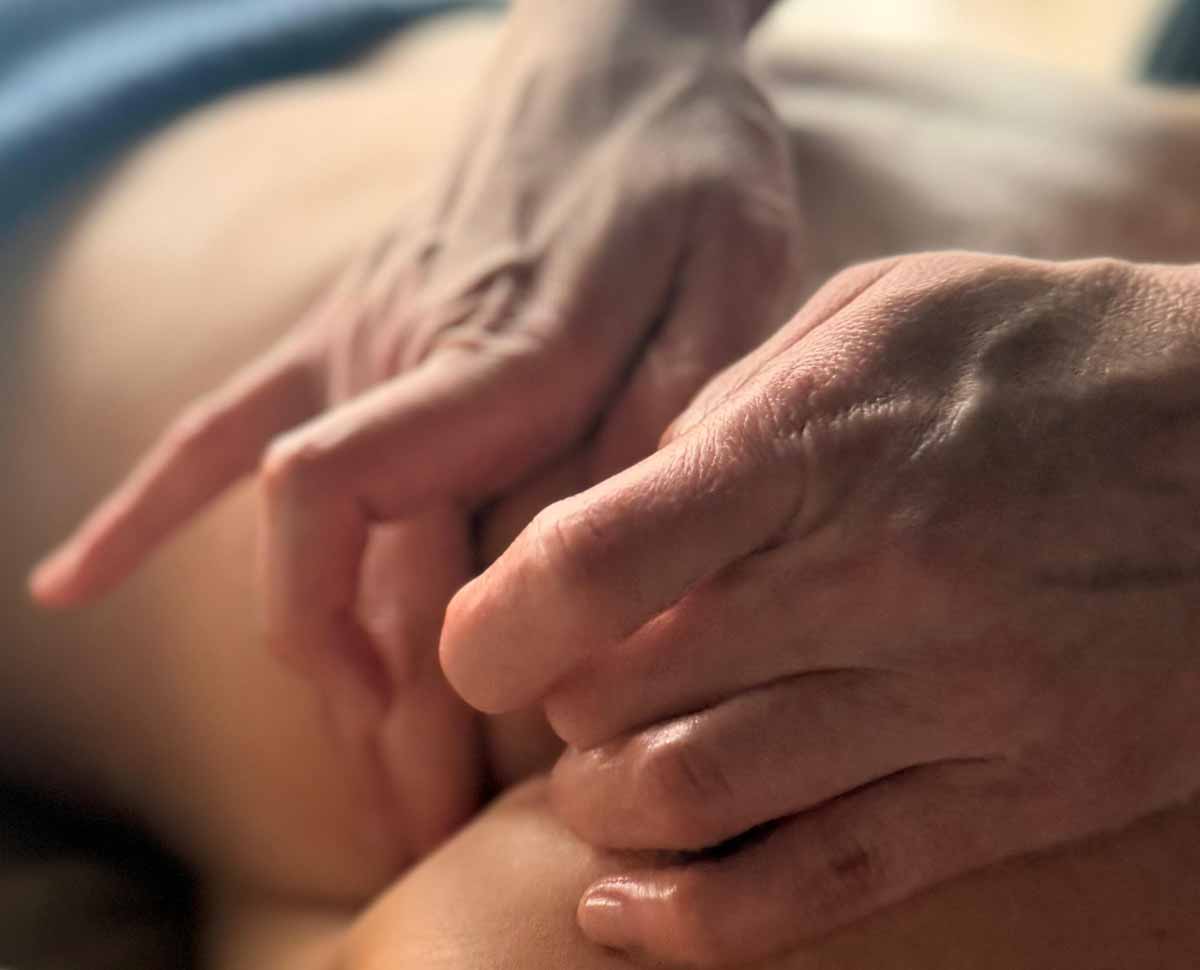
Marma points are locations in the body where muscles, vessels, bones, connective tissue, and/or joints meet. There are a total of 107 main marma points in the human body (the 108th marma point is the mind itself). Each marma point is connected to a specific organ, psychological and emotional themes, energy pathways, and a unique healing potential. Simply put, marma means a sensitive or vulnerable point – a space within the body. Through these sensitive and vulnerable areas, we can also receive healing or the opportunity to release specific physical-emotional blocks that marma addresses.
The body is the garment of our soul, shaping and changing according to our experiences. All our emotions naturally trigger bodily reactions such as muscle contractions, raised shoulders, chest guarding, clenched teeth, etc., which protect us or help us cope with intense stimuli. However, if emotions repeatedly fail to flow freely through our body, they can become recurring unconscious patterns. We then begin to stiffen in specific areas, losing flexibility and the ability to move freely, potentially becoming prisoners within the impenetrable armor of our own bodies. This process is often the initial stage of illness.
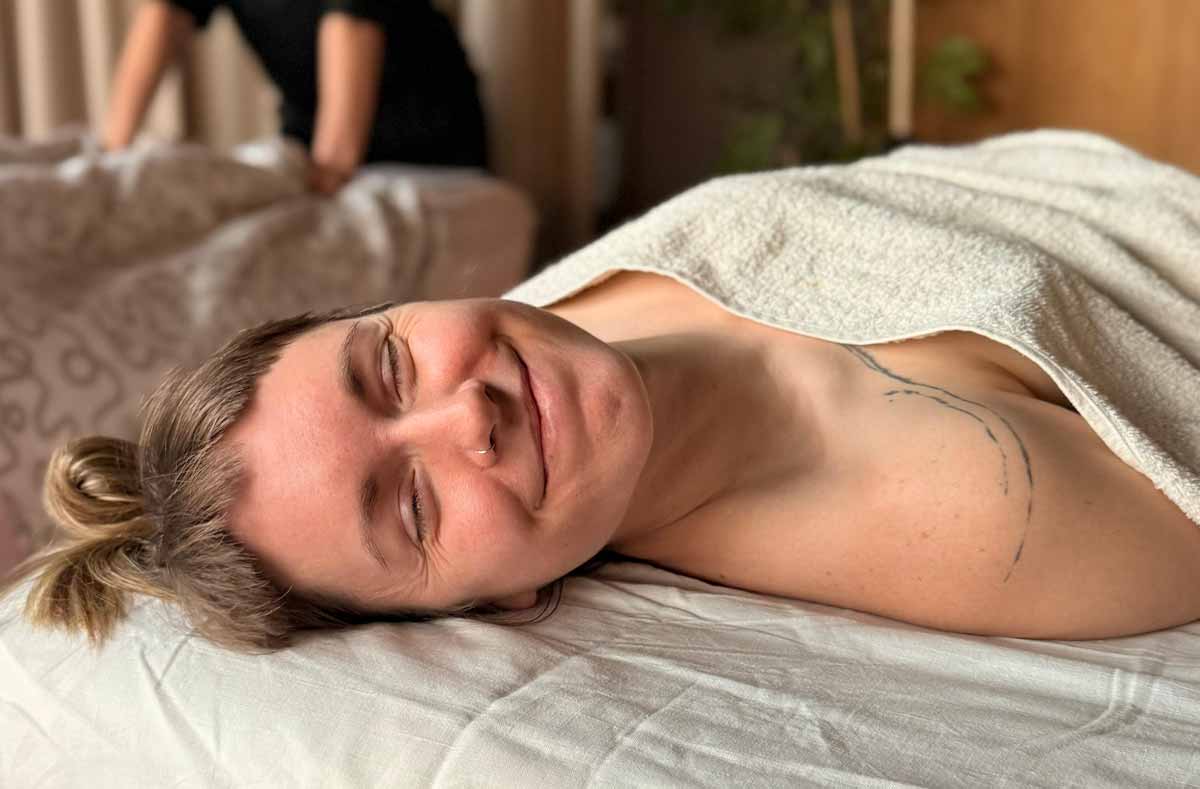

Puja Marma therapy helps uncover these bodily patterns and gradually dissolve them. The treatment positively influences specific bodily organs and the body's physical and energetic pathways, alleviating their burdens and the emotionally conditioned themes associated with them on a psychological level. Generally, PMT helps harmonize both body and mind, leading individuals into deep relaxation. In specific cases, it addresses the client's unique physical-mental situation, for which we always set a clear intention for the work. During the process, clients often enter meditative and trance-like states, allowing them to look deeper into their own inner contents and release unprocessed experiences.
Our Code of Ethics
We recognize that touching another person's body is a sensitive situation. We approach it with responsibility, respecting the dignity and physical integrity of each individual.
- As body therapists, we work to deepen our own competencies for working with another person's body. We expand our knowledge through further study, practice, and deepening self-awareness. The purpose of this ethical code is to define a clear, healthy, and safe space for both client and therapist.
- The body therapist formulates the contract in cooperation with the client as clearly as possible regarding the method used, session frequency, payments, and session duration.
- The body therapist considers all client information confidential. The fact that body therapy is taking place is also confidential. The principle of confidentiality can only be breached with the client's consent. The exception is professional consultation with a colleague, lecturer, or mentor, or within the framework of intervision, which is completely anonymized.
- The body therapist ensures they are energetically, emotionally, and cognitively present, centered, and defined within the therapeutic relationship. They respect the client's boundaries and internal processes. During therapy, the body therapist focuses exclusively on the client. Therapy is free from handling private or other matters such as answering the phone, opening the door for the postman, etc.
- The body therapist critically assesses the course of therapy, its progress, and its benefit to the client. They share their insights with the client and propose further steps openly, understandably, and clearly.
- The body therapist provides only those services for which they are authorized and qualified. They honestly inform the client about their abilities and the limitations of the therapy they provide. They are aware of limitations and contraindications.
- The body therapist respects the client's boundaries: physical, personal, spiritual, political, religious. Every form of touch or bodywork takes place only with the client's informed consent.
- The body therapist is not proactive regarding sexual conduct, nor will they engage in sexual acts or activities during a session, even if the client attempts to sexualize the relationship. The body therapist does not establish a close personal or sexual relationship with the client for the duration of their shared contract.
- The body therapist may refuse or terminate services to a client who behaves rudely, is under the influence of alcohol, drugs, or other consciousness-altering substances, or fails to adhere to pre-arranged rules such as appointment time, payment for treatment, etc.
- The body therapist continuously maintains and improves their professional knowledge, competencies, and professionalism through further education and training.
- The body therapist regularly attends a mentoring group or personal mentoring in the PMT method at least four times a year.
- The body therapist does not work with individuals with whom they have a close personal relationship. They also do not work with close associates of a client with whom they have already begun work, if doing so could pose risks to the client or therapist or negatively affect their collaboration. Should a conflict of roles arise during collaboration, the body therapist is obliged to point out such a phenomenon and inform the client of the potential risks. The client is obliged to inform the therapist of any conflict of roles if they are aware of it.
The basis for our ethical code is adopted from the CASi association (Zora Vančurová, Jan Řezáč, Zdenka Šímová). The code has been modified and supplemented.